Introduction to the Hospitality Market
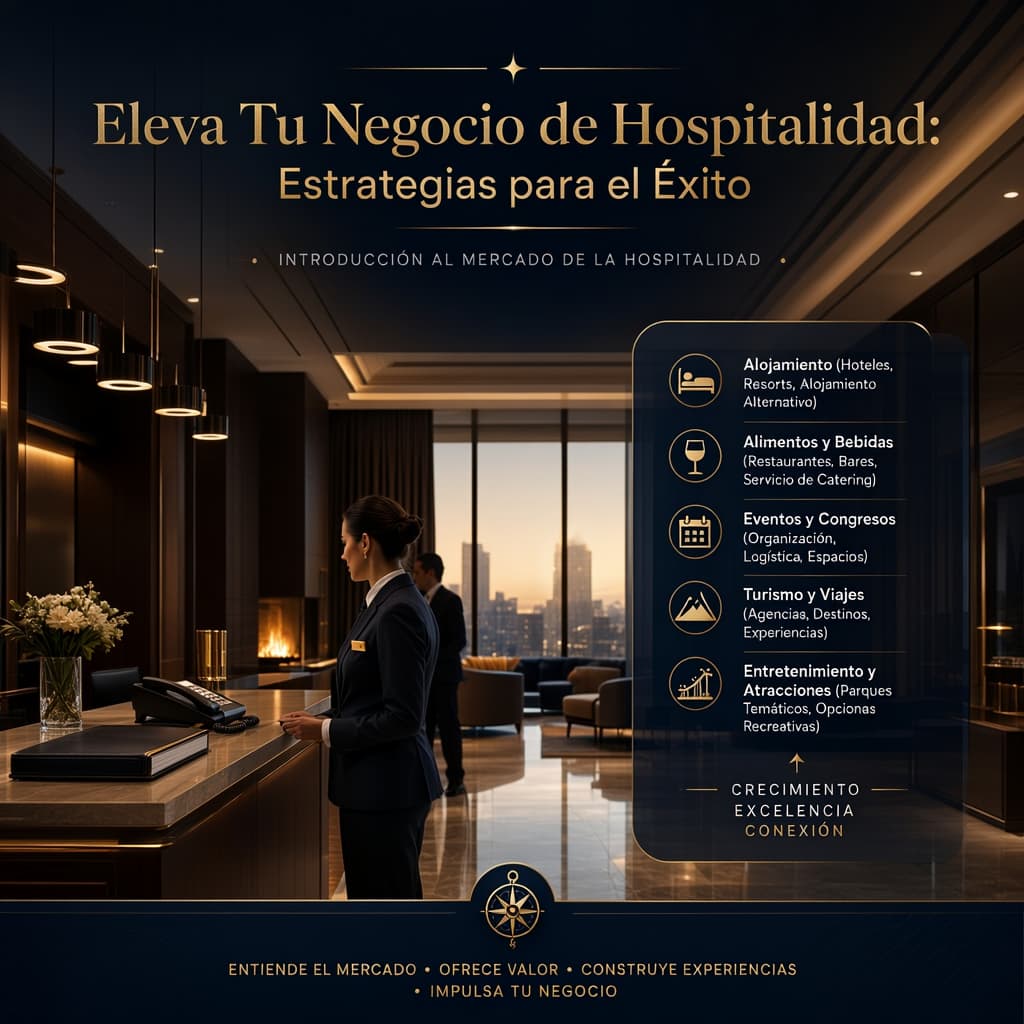
Eleve Your Hospitality Business: The hospitality market is characterized by its constantly evolving dynamics, driven by various factors, including changes in consumer preferences and technological innovations. This sector encompasses a wide range of services, such as accommodation, food and entertainment, making it a highly competitive area. Hospitality companies must be attentive to current trends to be able to offer experiences that align with their customers’ expectations.
One of the keys to success in this market lies in the ability to adapt to these changes.For example, consumer expectations are in constant transformation, largely driven by access to information and experiences shared on social media.
This means that companies must be prepared to adjust their supply to market demand.In addition, the growing importance of sustainability and social responsibility is affecting how consumers choose hospitality companies.
Professional training is presented as a key element in this adaptation. Well-trained employees not only improve the quality of service, but are also better able to anticipate and meet customer needs. Investing in continuous training is essential to maintain competitiveness in a rapidly changing environment. Companies that prioritize staff training will be better equipped to handle market fluctuations and create effective differentiation from their competitors.
Finally, it is vital that hospitality companies develop and maintain clear strategies that allow them to orient themselves in a complex and competitive environment.This implies not only being aware of consumer trends and expectations, but also implementing effective strategies for negotiation and marketing, thus ensuring sustainability and growth in the future.
Operational and Quality Supervision
The Role of a Hospitality Consultant
In the field of hospitality, the role of a consultant is fundamental to the growth and sustainability of.A consultant in hospitality, as in the case of Karla González, provides a combination of experience and specialized knowledge that can transform the way a establishment is operated. Its main objective is to identify areas of improvement and strategies to optimize processes, thus ensuring an exceptional and effective customer service.
Consultants in this sector are trained professionals who carry out a thorough assessment of the quality of service in different areas, from customer service to the management of daily operations. Karla González, for example, uses her skills as a “mystery shopper” to observe and analyze customer experience, providing detailed reports highlighting both strengths and opportunities within the business.
Whether by introducing new technologies, establishing service protocols or designing training programs for staff, a consultant’s tangible contributions can make the difference between success and stagnation in the competitive world of hospitality. By focusing on process optimization, a consultant helps companies reduce costs and improve operational efficiency, resulting in greater profitability and customer satisfaction.
Improving Directive and Operational Efficiency
Improving efficiency in both management and day-to-day operations is crucial for the success of hospitality.Implementing appropriate strategies allows you to reduce costs, optimize resources and ultimately provide a better customer service.
One of the most effective ways to improve operational efficiency is through process automation.Tools like hotel management systems and online booking scheduling not only streamline administrative tasks, but also minimize human errors. For example, a software that centralizes the management of reservations, accounts and services allows staff to focus more on customer service, thereby improving the guest experience.
Furthermore, continuous staff training is key to raising the level of efficiency. Investing in training not only improves employee skills, but also contributes to a motivated and committed work environment. Customer service training programs, complaint handling and the use of new technologies can be decisive for increasing team performance and, therefore, organizational efficiency.
The use of advanced technology to optimize internal communication is another essential aspect. Collaboration platforms and instant messaging can facilitate communication between departments, allowing problems to be solved faster and more efficiently. When teams are in constant communication, coordination is improved and the results of implemented actions are better measured.
In short, improving management and operational efficiency in the hospitality sector requires the adoption of technological tools, process automation and a strong focus on staff training.
Quality of customer service
The quality of customer service is a fundamental aspect in the hospitality industry.This sector is characterized by the constant interaction between the customer and staff, which makes the user experience a determining factor for success. Excellent customer service not only satisfies the expectations of guests, but also creates positive memories that foster long-term loyalty.This implies that companies must dedicate significant efforts to train their staff in interpersonal skills, attention to detail and problem-solving.
Characteristics of exceptional customer service can include empathy, efficiency and personalization of experience. Empathy allows employees to understand and anticipate guest needs, which can translate into a more effective and satisfying service. Efficiency refers to the ability to solve problems and provide assistance without excessive delays.Finally, customization offers a unique experience to each customer, making them feel valued and special, which is crucial in a sector where competition is intense.
Measuring the quality of customer service can be done through satisfaction surveys, online feedback and analysis of guest opinions. Each of these methods provides valuable information that can help identify areas of improvement. Corrective actions may include revisions of the current service protocol and additional staff training, focusing on findings collected from customer feedback.
Success cases, such as those of some boutique and luxury hotels, exemplify how a commitment to quality customer service can generate a significant impact on reputation and operational performance.These hotels often implement innovative practices that exceed expectations, creating memorable experiences and thus ensuring their customers’ loyalty.
Strategic Positioning in the Market
Strategic market positioning is crucial for hospitality companies seeking to stand out in a highly competitive sector. Understanding the market environment and the needs of the different consumer segments is an essential step to developing a solid value proposal that resonates with the target audience.
One of the first actions that hospitality companies should consider is the identification of market niches.This involves thoroughly analyzing consumer preferences and behaviors to discover unique opportunities.
For example, a hotel chain could specialize in eco-tourism, attracting those consumers who value sustainable practices.This approach not only improves visibility, but also helps build loyalty among those who are sensitive to sustainability and conservation of the environment.
This proposal should clearly communicate the unique benefits and experiences that consumers can expect when choosing their service over the competition. Authenticity and singularity in the offer are key; for example, a restaurant can offer a menu exclusively local that uses ingredients from nearby producers, thus highlighting its commitment to the community and the freshness of its dishes.
Marketing plays a crucial role in strategic positioning. Using digital marketing strategies, social media and attractive content can help to attract the right audience. Campaigns should be designed to highlight what differentiates the company in the market, connecting the value proposition with the consumer’s aspirations and needs. By doing this, hospitality companies can not only positively intervene in the purchase decision, but also build a solid image that lasts in the mind of the consumer in the long run.
The Mystery Shopper
The concept of mystery shopper, or hidden buyer, has become an essential tool for hospitality.This practice involves the use of hidden agents who visit a establishment for the purpose of evaluating the quality of service and customer experience. Mystery shoppers act like ordinary customers, enabling them to provide valuable insights into the processes and the attention they receive.
Mystery shoppers are instructed to carefully observe different aspects of the service, including the kindness of the staff, the cleaning of the place, and the quality of the products offered. During their visit, they collect information through questionnaires or reports that analyze different specific variables that affect customer satisfaction.This feedback becomes an invaluable resource for managers and owners, as it allows to identify areas of potential improvement.
The feedback received from mystery shoppers can be used in a variety of ways. First, it provides insights into the consistency of the service: whether all customers are receiving a similar treatment and how incidents are being managed.
For example, if a considerable number of evaluations highlight deficiencies in customer service, this may be a sign that additional training for staff is needed.In this sense, it is not only about identifying flaws, but also about fostering a higher standard that ensures a memorable customer experience.
Al implementar el concepto del mystery shopper, los negocios de hospitalidad pueden obtener una ventaja competitiva al garantizar un servicio al cliente excepcional. El enfoque proactivo de la evaluación continua permite no solo mejorar los estándares de servicio, sino también construir relaciones más sólidas con la clientela.
Adaptación a un Mercado en Cambio
El sector de la hospitalidad enfrenta incesantes cambios que van desde transformaciones en las expectativas del cliente hasta la aparición de tendencias emergentes. Para que las empresas prosperen en un entorno tan dinámico, es vital implementar estrategias que favorezcan la adaptación y la innovación. La flexibilidad organizacional se ha convertido en un requisito esencial para el éxito a largo plazo, permitiendo a las empresas responder rápidamente a las demandas fluctuantes del mercado.
Una de las estrategias más efectivas para adaptarse a un mercado en cambio es la escucha activa del cliente. Las empresas deben establecer mecanismos robustos para recoger y analizar la retroalimentación de los clientes. Esto puede incluir encuestas, entrevistas y el uso de redes sociales, que proporcionan una visión clara de las expectativas actuales de los consumidores. Con esta información, las empresas pueden ajustar su oferta para satisfacer mejor estas demandas.
Además, permanecer al tanto de las tendencias emergentes es crucial. Por ejemplo, la sostenibilidad se ha convertido en un factor determinante para muchos consumidores de hoy. Las empresas de hospitalidad que integren prácticas sostenibles en su operación no solo mejoran su imagen de marca, sino que también pueden acceder a un segmento de mercado en crecimiento que valora estos principios. Ofrecer menús con ingredientes locales, reducir el uso de plásticos y optimizar el consumo de energía son algunas acciones que pueden captar la atención de los clientes más conscientes del medio ambiente.
Por último, fomentar un ambiente de innovación dentro de la organización es clave para la adaptación continua. Esto conlleva capacitar a los empleados y fomentar la creatividad, permitiendo que cada miembro del equipo proponga nuevas ideas que puedan impulsar el negocio. La colaboración y el trabajo en equipo son fundamentales para desarrollar soluciones que respondan a los cambios del mercado, asegurando que la empresa se mantenga competitiva y relevante en el sector de la hospitalidad.
Casos de Éxito de Transformación
A lo largo de la industria de la hospitalidad, numerosos ejemplos destacan cómo la implementación de estrategias efectivas puede resultar en transformaciones significativas. Analizar estos casos de éxito proporciona una perspectiva clara sobre el impacto positivo de la consultoría en el crecimiento y la sostenibilidad de los negocios en este sector.
Un ejemplo notable es el de un hotel boutique en el centro de una ciudad turística que, tras la asesoría de expertos en gestión hotelera, logró aumentar su tasa de ocupación en un 40% en solo un año. Al rediseñar su oferta y establecer colaboraciones con empresas locales, no solo atrajeron a más huéspedes, sino que también mejoraron su experiencia general, lo que se tradujo en un aumento en las reseñas positivas y la lealtad del cliente.
Otro caso ejemplar involucra a una cadena de restaurantes que, al implementar un enfoque de sostenibilidad basado en la consultoría, consiguió reducir sus costos operativos en un 30% a través de una gestión más eficiente de los recursos. Esto no solo benefició económicamente a la empresa, sino que también atrajo a una clientela más consciente del medio ambiente, aumentando así su base de clientes. Los testimonios de los dueños resaltan cómo estas transformaciones no solo mejoraron los números de su negocio, sino que también fomentaron un sentido de propósito y comunidad entre los empleados.
Además, estadísticamente, empresas que han pasado por procesos de transformación guiados por consultores han reportado un crecimiento anual en ingresos del 25%. En resumen, es evidente que las estrategias de transformación no son simplemente beneficiosas, sino esenciales para los negocios de hospitalidad que buscan no solo sobrevivir sino prosperar en un mercado competitivo. Este ciclo de mejora continua y adaptabilidad es clave para el éxito sostenible en el ámbito de la hospitalidad.
Preguntas frecuentes
¿Por qué es importante adaptarse a los cambios del mercado en la industria de la hospitalidad?
La industria de la hospitalidad evoluciona constantemente debido a cambios en las expectativas del cliente, avances tecnológicos y nuevas tendencias como la sostenibilidad. Adaptarse permite a los negocios mantenerse competitivos, satisfacer mejor a sus clientes y garantizar su crecimiento a largo plazo.
¿Cómo puede un consultor en hospitalidad mejorar el desempeño de un negocio?
Un consultor en hospitalidad analiza las operaciones, la calidad del servicio y la experiencia del cliente para identificar áreas de mejora. A través de estrategias personalizadas, implementación de tecnología, capacitación del personal y evaluaciones como el mystery shopper, ayuda a optimizar procesos, aumentar la rentabilidad y elevar la satisfacción del cliente.
¿Qué estrategias ayudan a mejorar la eficiencia operativa en hoteles y restaurantes?
Algunas estrategias clave incluyen:
Automatización de procesos mediante software de gestión.
Implementación de sistemas de reservas en línea.
Capacitación continua del personal.
Mejora de la comunicación interna con herramientas digitales.
Estas acciones reducen errores, optimizan recursos y mejoran la experiencia del cliente.
¿Qué es un mystery shopper y cómo beneficia a un negocio de hospitalidad?
Un mystery shopper es un evaluador encubierto que visita el establecimiento como cliente regular para analizar la calidad del servicio. Proporciona retroalimentación detallada sobre atención, procesos y experiencia general, permitiendo identificar oportunidades de mejora y elevar los estándares de servicio.
Conclusiones y Pasos a Seguir
A medida que concluimos este análisis sobre la elevación de negocios en el sector de la hospitalidad, es evidente que existen múltiples estrategias que pueden ser adoptadas para alcanzar el éxito. En primer lugar, el enfoque en la experiencia del cliente es fundamental. Las empresas que priorizan la satisfacción del cliente y buscan constantemente maneras de mejorar sus servicios tienden a destacar en unmercado competitivo.
Además, la implementación de tecnología avanzada puede optimizar las operaciones y hacer que el negocio sea más eficiente. Desde plataformas de reservas en línea hasta sistemas de gestión de relaciones con los clientes (CRM), el uso de herramientas modernas no solo mejora la experiencia del cliente, sino que también reduce costos y aumenta la productividad.
Por otro lado, la formación y capacitación del personal son aspectos esenciales. Invertir en el desarrollo profesional de su equipo no solo mejora la moral, sino que también asegura que los empleados estén equipados con las habilidades necesarias para brindar un servicio excepcional.
Es crucial que los líderes del sector reflexionen sobre las prácticas actuales y consideren la incorporación de estas estrategias. Un enfoque integral que contemple la satisfacción del cliente, la innovación tecnológica y el desarrollo del capital humano puede marcar una diferencia significativa. Como siguiente paso, se recomienda realizar un diagnóstico de la situación actual de su negocio, identificar áreas de mejora y desarrollar un plan de acción que contemple las estrategias discutidas en este artículo.
En última instancia, el camino hacia la excelencia en el sector de la hospitalidad es un proceso continuo. La adaptación y la atención a las tendencias del mercado son vitales para garantizar la relevancia y la sostenibilidad a largo plazo del negocio. Al implementar estas estrategias, los profesionales de la hospitalidad pueden no solo elevar su negocio, sino también contribuir al crecimiento y la evolución de la industria en su conjunto.