
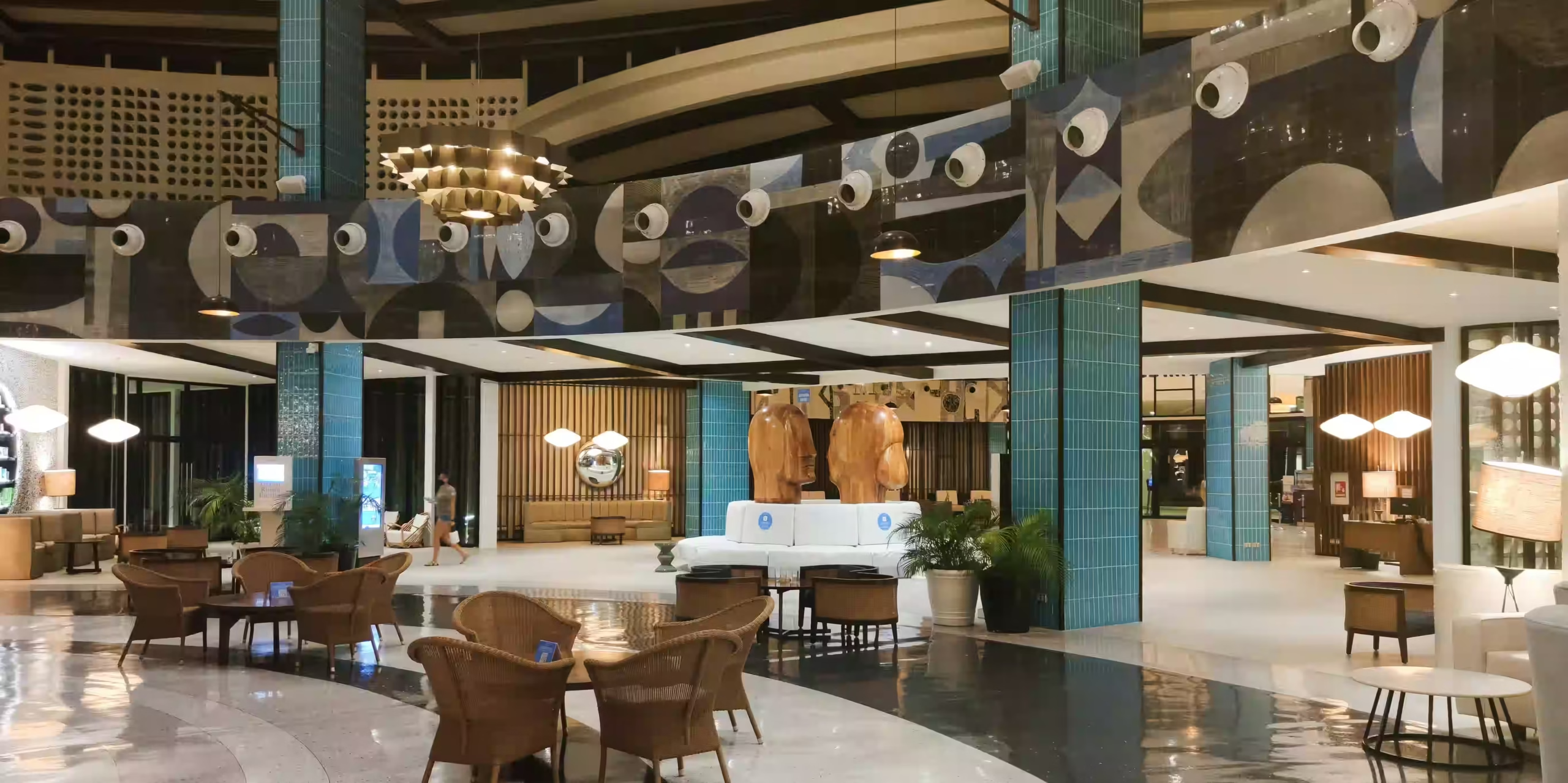
Introduction to Hospitality Trends
Trends in the hospitality sector are key to understanding how hotels can adapt and stand out in an increasingly competitive market.These trends cover various areas, from customer experience to sustainability and technology, and their evolution directly affects the way hotels operate and communicate with their guests. As consumers change their preferences and expectations, it is imperative that hospitality companies not only recognize these dynamics, but also anticipate future currents.
In recent years, we have observed a significant shift in hospitality trends, driven by factors such as the growing importance of personalization and the inclusion of smart technology in the guest experience.The arrival of the pandemic also played a crucial role, accelerating the need for adjustments in cleaning, security and digital services. As we move towards 2026, trends are likely to continue to evolve, with a stronger focus on sustainability and responsible practices, which are increasingly valued by consumers.
By 2026, projections suggest that innovation in technology, such as the use of artificial intelligence and mobile applications to improve customer experience, will consolidate. As hotels integrate these trends into their strategy, it will be crucial for them not only to survive, but to thrive,ining their relevance in a constantly changing environment.
Sustainability as a priority
Sustainability has gone from being a secondary concept to becoming a key priority within the hotel industry.As social awareness about climate change and environmental degradation increases, consumers seek experiences that are not only comfortable and pleasant but also responsible. This trend represents a significant opportunity for hotels who want to differentiate in a highly competitive market.
Hotels must adapt to the expectations of consumers who value sustainability. Implementing sustainable practices, such as resource efficiency, waste reduction and adoption of renewable energy, has become essential. Modern customers not only assess the price and quality of the service, but also the environmental impact of their decisions. Therefore, it is crucial that hotels adopt a proactive approach to reducing their environmental footprint.
A key aspect of this transformation is the efficient management of energy and water consumption.Many establishments are investing in smart technologies to optimize the use of these resources, which not only contributes to sustainability, but can also result in significant long-term savings. In addition, the implementation of recycling and compostage programmes can help to minimize waste, thus aligning with consumer expectations regarding greater environmental responsibility.
Likewise, the integration of renewable energies, such as solar and wind, is gaining ground among hotels seeking to decarbonize their operations.This type of initiatives not only favors sustainability, but can also be capitalized in marketing strategies, attracting a wider audience that prioritizes environmental conservation. In this sense, sustainability is no longer just a trend, but a necessity for hotels that aspire to thrive in the future.
Technology and Automation in the Guest Experience
The incorporation of technological innovations in the hotel sector is revolutionizing the way guests interact with the services offered by hotels.The implementation of hotel management systems allows for better organization and access to information, facilitating booking management, billing and tracking customer preferences. These systems not only optimize the internal operation, but also contribute to a personalized experience for the guest.
Furthermore, artificial intelligence (AI) has played a central role in this transformation. Through advanced algorithms, hotels can analyze large volumes of data to predict customer behaviors and preferences. For example, AI can suggest additional services or personalized offers that increase the level of guest satisfaction. This translates into closer attention and adapted to individual needs, which is critical in a competitive environment.
Another increasingly used tool are chatbots, which allow guests to communicate efficiently and effectively with the hotel staff. These virtual assistants are available 24 hours a day and can respond to common queries, make bookings and provide service information, freeing hotel staff to focus on more complex tasks and ensuring guest questions are answered immediately. Automation of these processes not only improves operational efficiency, but also ensures a more fluid and satisfying guest experience.
In short, integrating technology and automation into the guest experience is crucial for hotels seeking to stand out in an increasingly demanding market.Those who adopt these innovations will be better positioned to offer exceptional service and meet their customers’ expectations in 2026 and beyond.
Personalization of the Guest Experience
In today’s hotel industry, personalizing the guest’s experience has become a key aspect to differentiate itself from the competition. Hotels are increasingly focused on using data and analytics to better understand customer preferences, allowing them to offer services tailored to their specific needs. This approach not only improves the visitor’s experience, but also increases customer loyalty and can encourage oral recommendation.
The use of technologies such as customer relationship management systems (CRM) allows hotels to collect and analyze valuable information about guests.These systems collect data from the time of the booking, such as room preferences, food and recreational activities. By integrating this information, hotels can further personalize interactions by offering preferential services such as check-in and check-out, as well as recommendations for local activities according to the interests identified in previous visits.
In addition, the use of artificial intelligence and predictive analysis provides hotels with the ability to anticipate guest needs.For example, if a customer has requested specific pillows at previous stays, staff will be able to prepare the room in advance with those preferences, creating a positive impact from the beginning of the experience. In this way, hotels not only respond to the needs of guests, but also manage to overcome them, establishing a deeper connection with them.
Finally, feedback also plays a crucial role in personalizing the experience. Hotels should encourage guests to provide honest feedback about their stay. These data can be used to make adjustments and improvements to the services, ensuring that relevance isined and a true and memorable experience is achieved.
New forms of work and well-being of staff
In the hospitality industry, a significant shift is being observed towards new forms of work that prioritize staff well-being.This is crucial as talent retention has become a constant challenge due to high employee rotation. Hotel companies are adopting innovative approaches to create a positive working environment, which not only improves employee satisfaction, but also contributes to better customer service.
One of the most relevant trends is the implementation of flexible schedules.This model allows employees to balance their work responsibilities with their personal lives, which in turn reduces stress and increases productivity. Hotels that offer remote or hybrid work options are seeing an increase in job satisfaction, resulting in greater employee loyalty.In addition, fostering open communication and collaboration among team members enriches work culture and boosts employee engagement with the company.
Investing in professional development not only prepares employees for new challenges within the organization, but also motivates them to grow and stay in the company. Training opportunities can include seminars, workshops and mentoring programs, which are key to keeping employees up to date with industry trends.
Companies that implement psychological support programs and wellness resources, such as yoga classes or meditation, are seeing a positive impact on team morale. In short, adopting new forms of work that put the well-being of staff in the center not only helps retain talent, but also improves the guest’s experience in hotels.
Digital Marketing and Social Media
Digital marketing has become an essential component for hotels that want to remain competitive in an ever-evolving market.In the information age, potential guests use the Internet and social media to research and make decisions about their accommodation options. Therefore, having a robust and attractive online presence is crucial to attracting new customers and fidelizing existing ones.
Platforms such as Instagram, Facebook and Twitter allow hotels to show their property, share guest testimonials and promote special offers. Visual content, especially on Instagram, is critical, as quality images can capture user attention and generate interest.Publishing consistently and at optimal times helps improve visibility and engagement, which in turn can translate into more bookings.
Within the framework of digital marketing, it is essential to use SEO tools (search engine optimization) to improve the ranking of the hotel website in the search results. Un sitio web bien optimizado no solo atraerá más tráfico, sino que también ofrecerá una experiencia de usuario superior, lo cual es esencial para disminuir la tasa de rebote y aumentar la conversión. Incluyendo palabras clave relevantes en el contenido del sitio, se puede lograr que el hotel sea fácilmente encontrado por huéspedes potenciales.
Aparte de las redes sociales y SEO, el email marketing se presenta como otra estrategia efectiva. Enviar boletines informativos a una lista de contactos puede mantener a los huéspedes informados sobre eventos especiales, promociones y novedades del hotel. Para maximizar su efectividad, es recomendable segmentar a la audiencia y personalizar el contenido para cada grupo. Con una estrategia de marketing digital bien estructurada, los hoteles pueden mejorar significativamente su visibilidad y atraer a más visitantes en un entorno altamente competitivo.
Experiencias únicas y actividades locales
En el competitivo entorno de la hospitalidad, los hoteles están rediseñando sus ofertas para centrarse en proporcionar experiencias únicas que resalten la cultura local. Esta tendencia refleja un cambio en las expectativas de los viajeros modernos, quienes buscan sumergirse en la autenticidad de los destinos que visitan. Ofrecer actividades que conecten a los huéspedes con la comunidad local no solo enriquece su estancia, sino que también mejora la satisfacción general del cliente.
Incorporar experiencias locales puede abarcar una variedad de iniciativas. Por ejemplo, los hoteles podrían organizar talleres de cocina local donde los visitantes aprendan a preparar platos tradicionales. Este tipo de interacción no solo les otorga una habilidad nueva, sino que también les proporciona un recuerdo valioso relacionado con su viaje. Asimismo, tours guiados por expertos locales que exploran la historia y la cultura de la región pueden ofrecer una perspectiva rica y auténtica que los visitantes difícilmente obtendrían por su cuenta.
Además, la colaboración con artesanos y artistas locales puede permitir a los hoteles ofrecer productos únicos en sus tiendas o incluso en las habitaciones, creando así un vínculo directo entre el viajero y la cultura del lugar. Por otro lado, al incorporar actividades locales en la oferta del hotel, se fomenta el apoyo a la economía local, lo cual es un argumento favorable para turistas conscientes y responsables.
Asimismo, la personalización de las experiencias, como itinerarios adaptadas a los intereses individuales de los huéspedes, puede llevar la satisfacción del cliente a un nuevo nivel. En este sentido, los hoteles deben hacer un esfuerzo consciente para conocer mejor a sus visitantes, permitiendo crear interacciones más significativas. La atención a estos detalles no solo contribuye a la satisfacción del cliente, sino que también puede resultar en recomendaciones positivas y fidelización, algo esencial para cualquier hotel que aspire a mantenerse relevante en el sector de la hospitalidad en 2026.
Seguridad y salud post-pandemia
La pandemia del COVID-19 ha transformado radicalmente el enfoque de la industria hotelera hacia la salud y la seguridad. A medida que el mundo se adapta a una nueva normalidad, los hoteles deben implementar estrictos protocolos de salud que no solo busquen proteger a los huéspedes, sino también generar confianza en su retorno. La percepción de seguridad puede ser un factor determinante en la decisión del cliente al elegir un alojamiento, lo que hace imperativo que las propiedades hoteleras se alineen con estos estándares.
Los hoteles deben adoptar medidas de higiene amplias, que incluyan la limpieza frecuente de áreas clave como recepción, ascensores, y zonas comunes, así como la desinfección regular de las habitaciones. El uso de productos de limpieza certificados y la capacitación del personal en nuevas prácticas de higiene son fundamentales. Por ejemplo, se espera que el personal esté entrenado en protocolos de limpieza mejorados y en el manejo de posibles situaciones de riesgo.
Además, muchos hoteles han incorporado tecnología para minimizar contactos físicos, como el uso de aplicaciones móviles para el check-in y check-out, y sistemas de pago sin contacto. Estas innovaciones no solo aumentan la seguridad sino que, al mismo tiempo, mejoran la experiencia del huésped al facilitar procesos que antes podían ser engorrosos.
El distanciamiento social en espacios comunes, como restaurantes y áreas de ocio, también se ha vuelto una práctica estándar. Esto puede incluir la reconfiguración de la disposición de mesas y sillas para garantizar un espacio seguro entre los comensales. Los hoteles que satisfacen estas expectativas de seguridad y salud no solo demostrarán su compromiso con el bienestar de los huéspedes, sino que también podrán destacarse en un mercado competitivo.
Conclusiones y recomendaciones para los hoteles
Las tendencias en hospitalidad para el año 2026 son claras: los hoteles deben adaptarse y evolucionar para seguir siendo competitivos en un mercado en constante cambio. A medida que los viajeros buscan experiencias únicas y personalizadas, es fundamental que los establecimientos no solo ofrezcan un alojamiento de calidad, sino que también pongan énfasis en el servicio al cliente. La atención al detalle y el enfoque en la satisfacción del cliente se han convertido en pilares esenciales de la industria hotelera moderna.
Además, la sostenibilidad seguirá desempeñando un papel crucial en las decisiones de los consumidores. Los hoteles deben implementar prácticas ecológicas, desde el uso de productos biodegradables hasta la reducción de la huella de carbono. Este compromiso no solo mejorará la imagen de marca, sino que también atraerá a un segmento de clientes cada vez más consciente de las cuestiones ambientales. Incorporar tecnologías limpias y realizar auditorías de sostenibilidad son pasos necesarios en esta dirección.
La digitalización es otra tendencia que no puede subestimarse. La integración de soluciones tecnológicas, como aplicaciones para reservas, sistemas de gestión que mejoren la eficiencia y herramientas de análisis de datos, permitirán a los hoteles adaptarse mejor a la demanda del mercado. Invertir en capacitación del personal para el uso de estas herramientas es igualmente fundamental.
Por último, la flexibilidad y la innovación son clave. Los hoteles deben estar preparados para adaptarse rápidamente a las nuevas demandas de los consumidores y a situaciones imprevistas, como pandemias o cambios económicos. Esto significa no solo diversificar la oferta de servicios, sino también adoptar una mentalidad abierta hacia las nuevas ideas y tendencias.
En conclusión, la competitividad en el sector hotelero en 2026 depende de la capacidad de adaptación y renovación. Los hoteles que logren integrar calidad en el servicio, sostenibilidad, innovación tecnológica y flexibilidad estarán mejor posicionados para atraer a una clientela que busca más que un simple lugar para hospedarse; buscan una experiencia memorable y responsable.